Mental Wellness and Vision Loss Video Series
ASPECT Program logo
Vision Loss and Mental Health: Key Takeaways from an Interprofessional Task Force

Vision loss is as much a mental health journey as a physical one. Prevent Blindness launched the Mental Wellness and Vision Loss video series to offer support, hope, and practical information for individuals adjusting to vision loss, as well as for those supporting them.

The series features blind and visually impaired (BVI) mental health therapists who uniquely bridge two worlds: lived experience with vision loss and professional mental health practice. Through their stories and insights, they explore how these perspectives intersect and inform their work.

Key themes include guidance for therapists working with the BVI community, the experience of being a BVI therapist, the power of storytelling, and the complex connections between grief, disability, and identity.
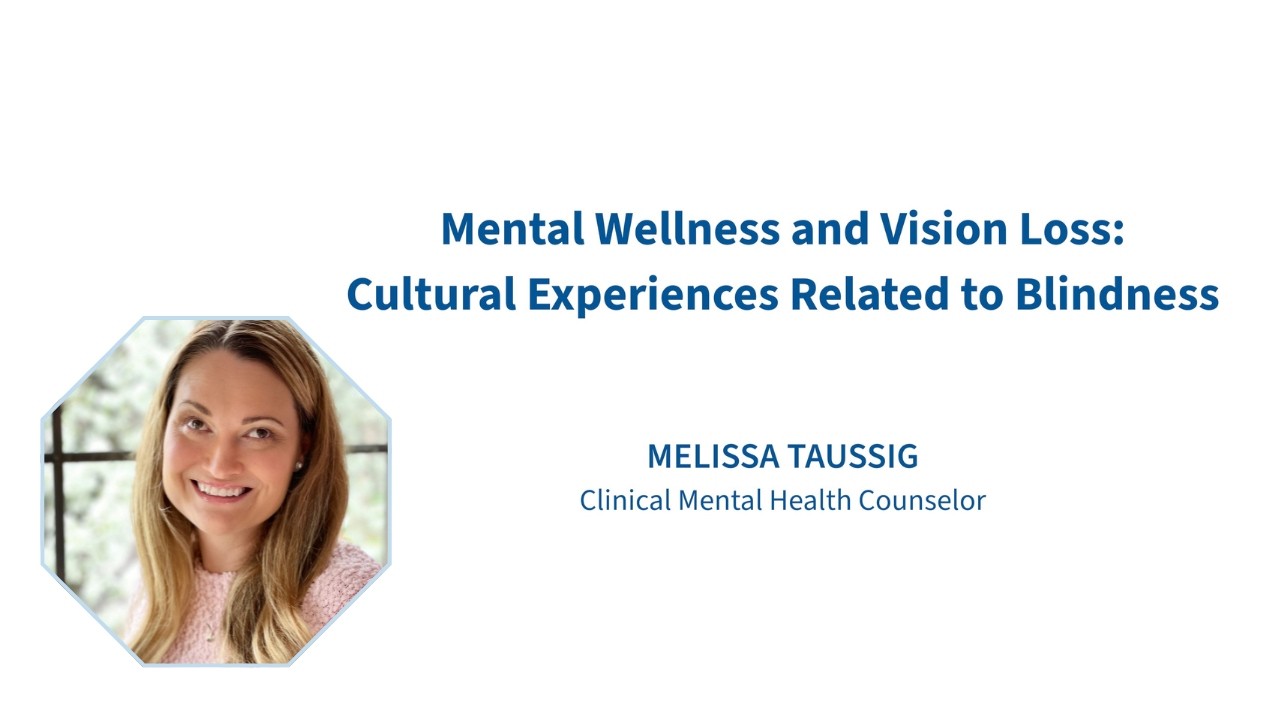
Mental Wellness and Vision Loss: Cultural Experiences Relating to Blindness
Clinical Mental Health Counselor, Melissa Taussig, answers the question: What are examples of ableist experiences relating to blindness?
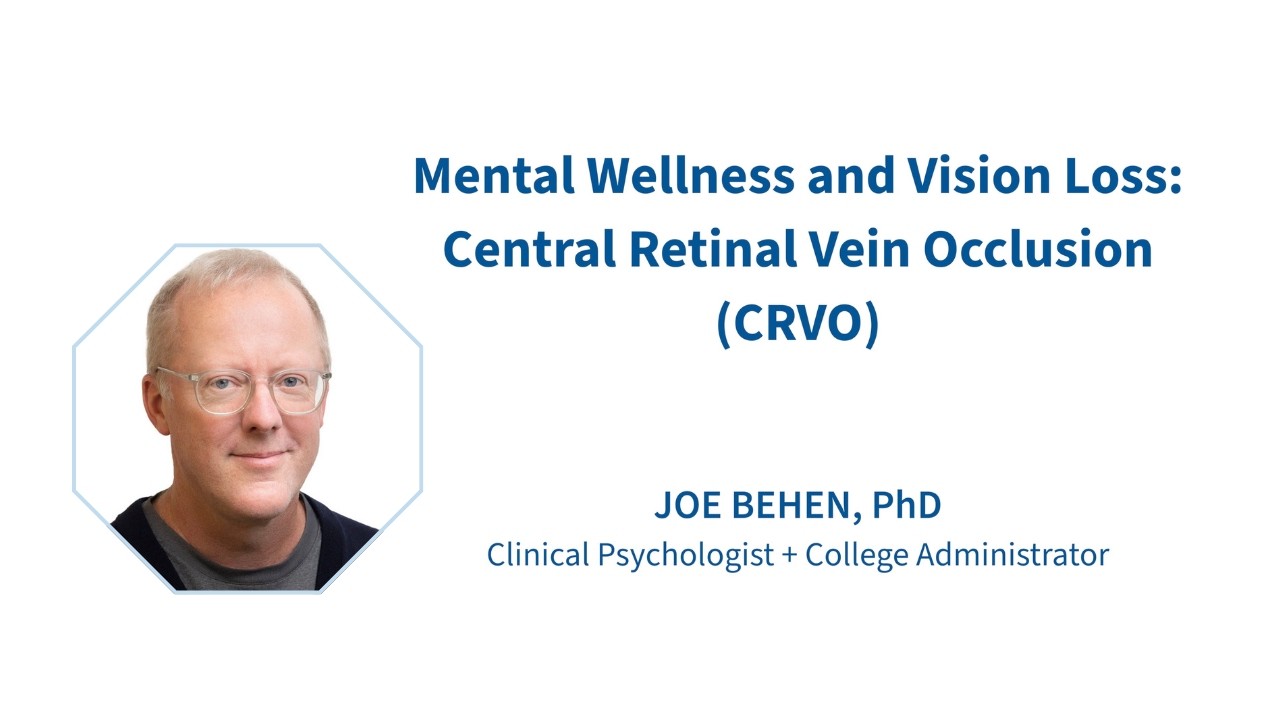
Mental Wellness and Vision Loss: Central Retinal Vein Occlusion (CRVO)
Clinical psychologist, Joe Behen, answers the question: What has your personal journey with Central Retinal Vein Occlusion (CRVO) been like?
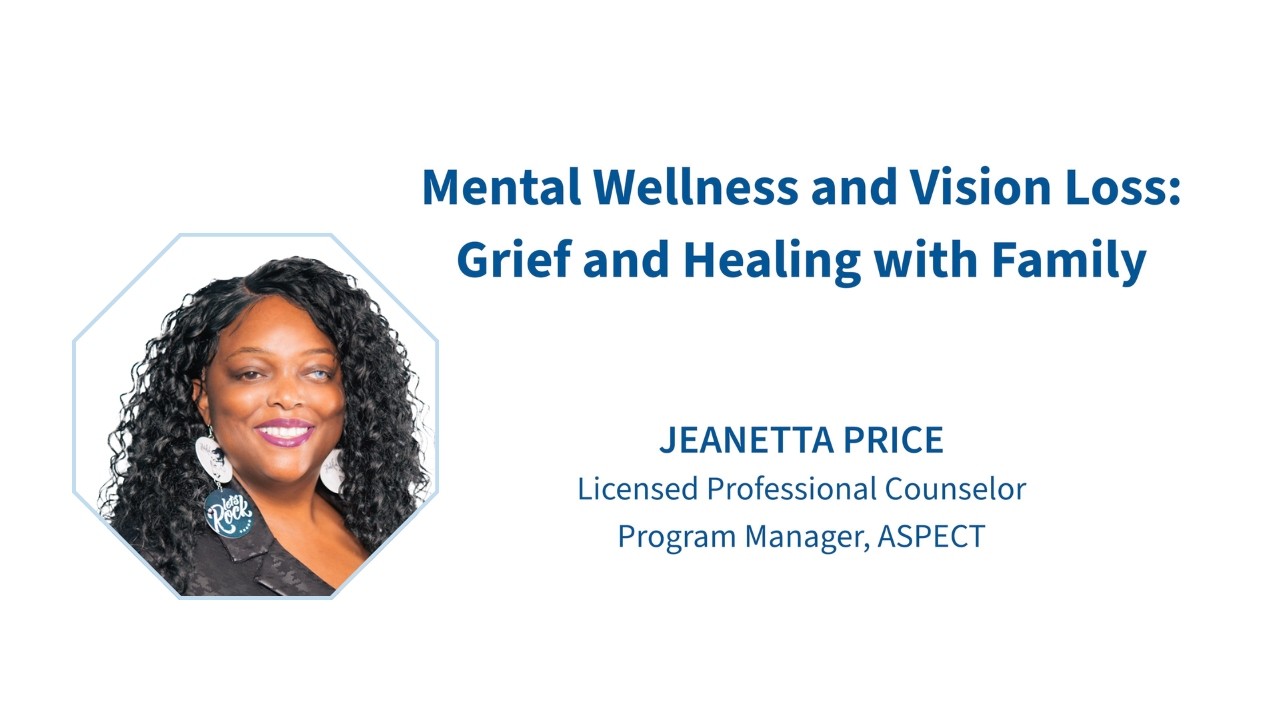
Mental Wellness and Vision Loss: Grief and Healing with Family
Licensed Professional Counselor, Jeanetta Price, answers the question: What advice do you have for family members of the blind and visually impaired community, as well as professionals working with the community?
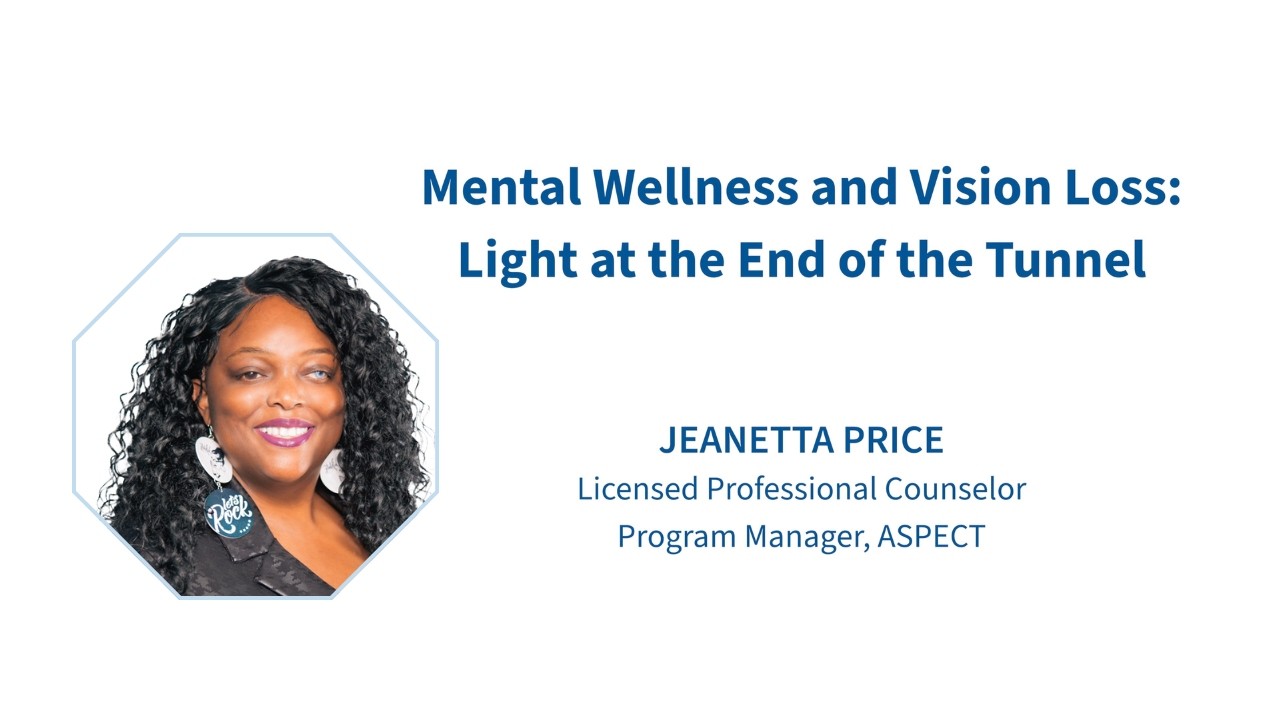
Mental Wellness and Vision Loss: Light at the End of the Tunnel
Licensed Professional Counselor, Jeanetta Price, answers the question: What advice do you have for people who are new to sight loss or blindness?
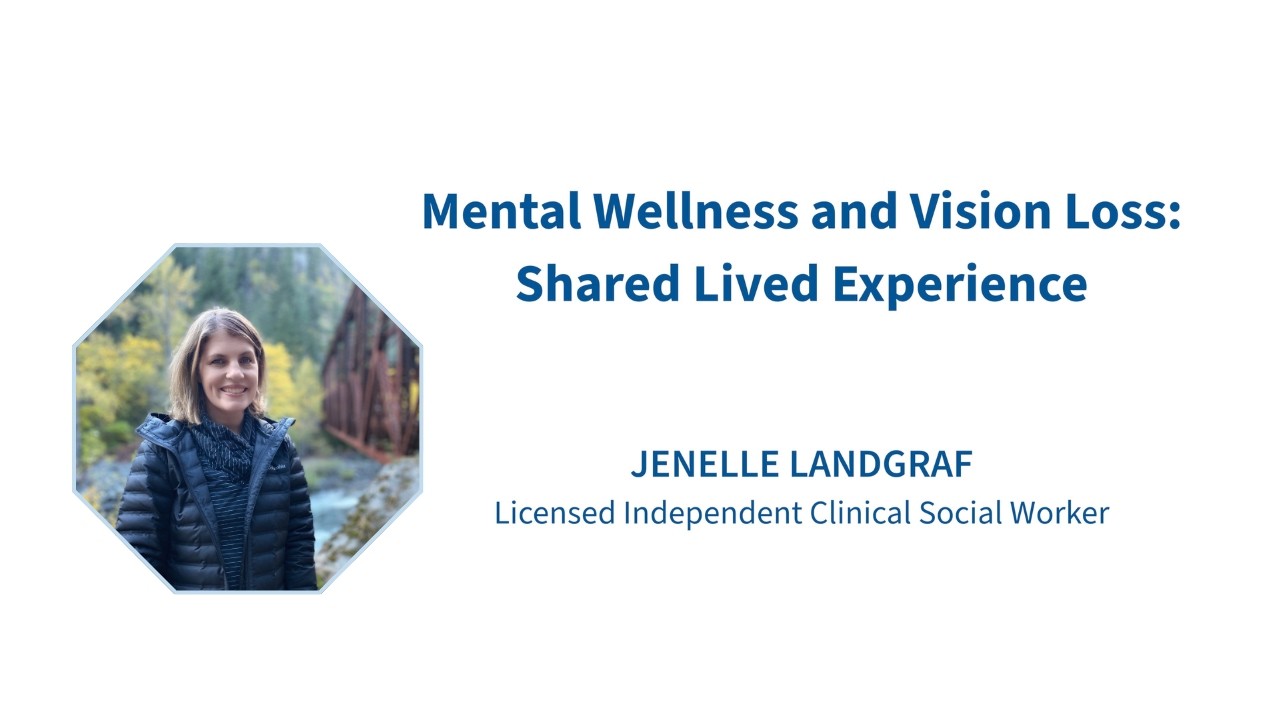
Mental Wellness and Vision Loss: Shared Lived Experience (Part 1)
Clinical social worker Jenelle Landgraf answers the question: What has been the benefit of being a blind therapist and counseling blind or low vision individuals?
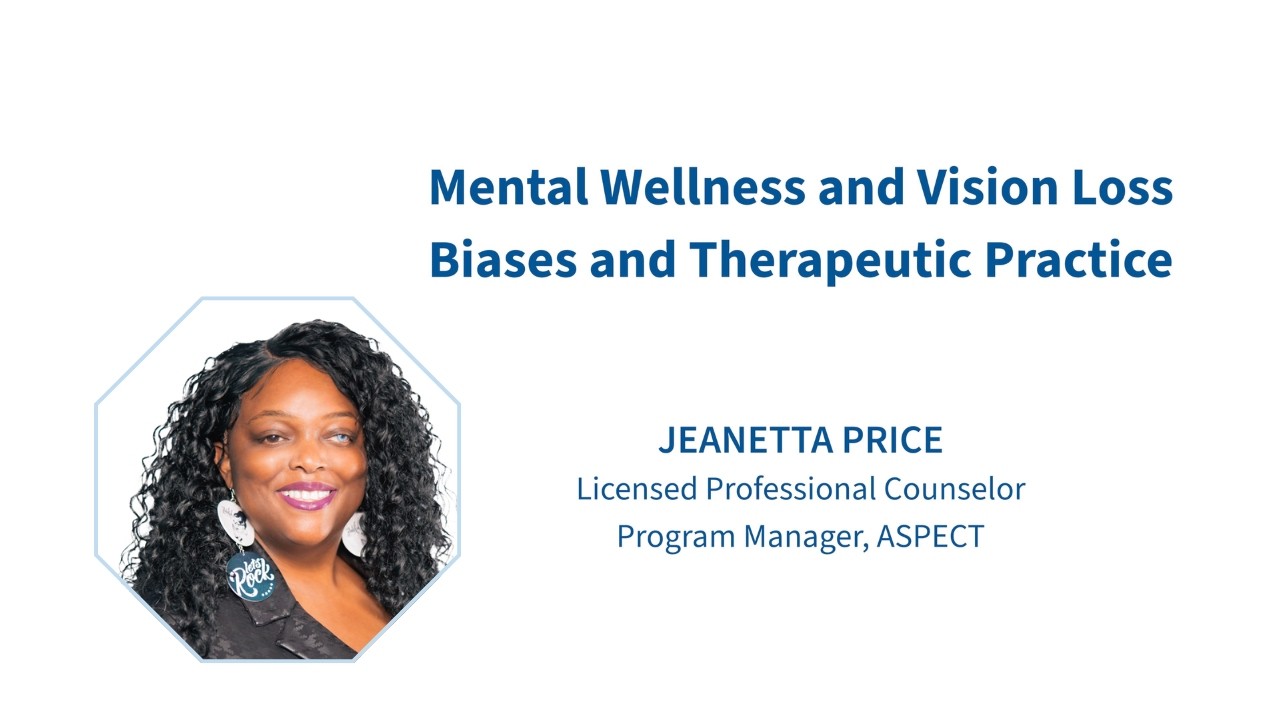
Mental Wellness and Vision Loss: Biases and Therapeutic Practice
Licensed Professional Counselor, Jeanetta Price, answers the question: What biases did you have to overcome to become a therapist?
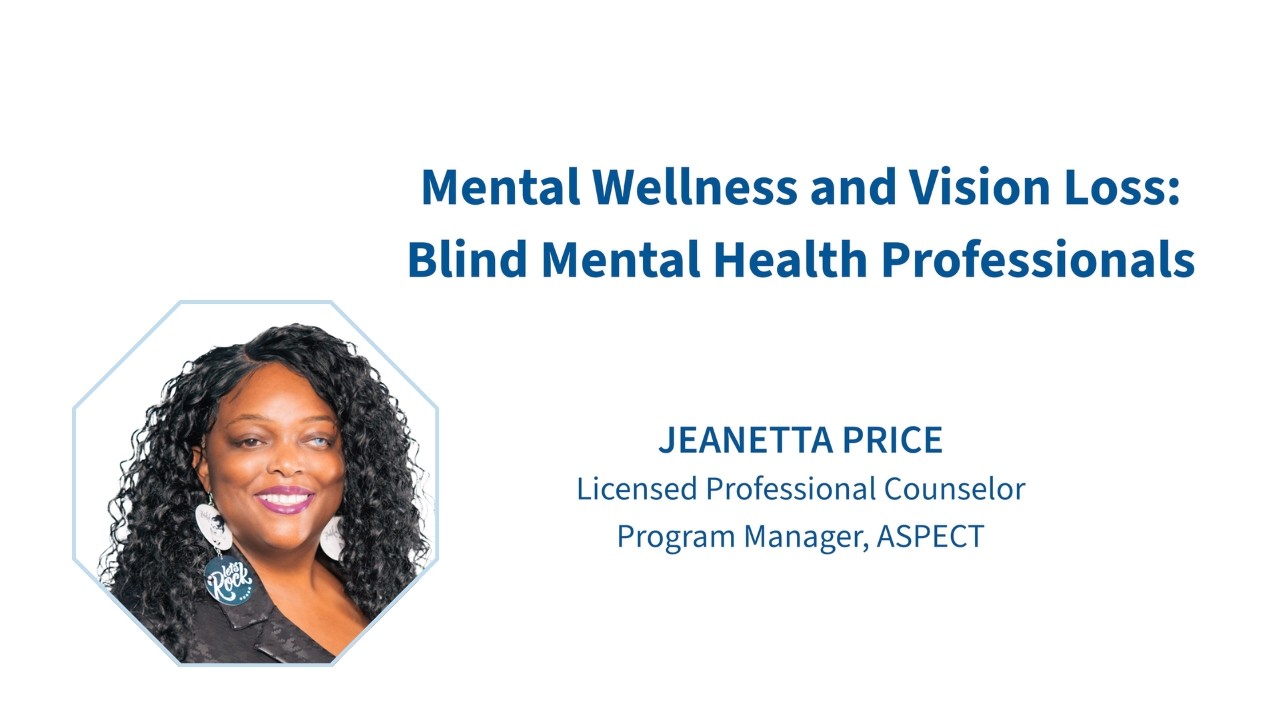
Mental Wellness and Vision Loss: Blind Mental Health Professionals
Licensed Professional Counselor, Jeanetta Price, answers the question: Why does representation matter? How are blind and visually impaired therapists change agents?
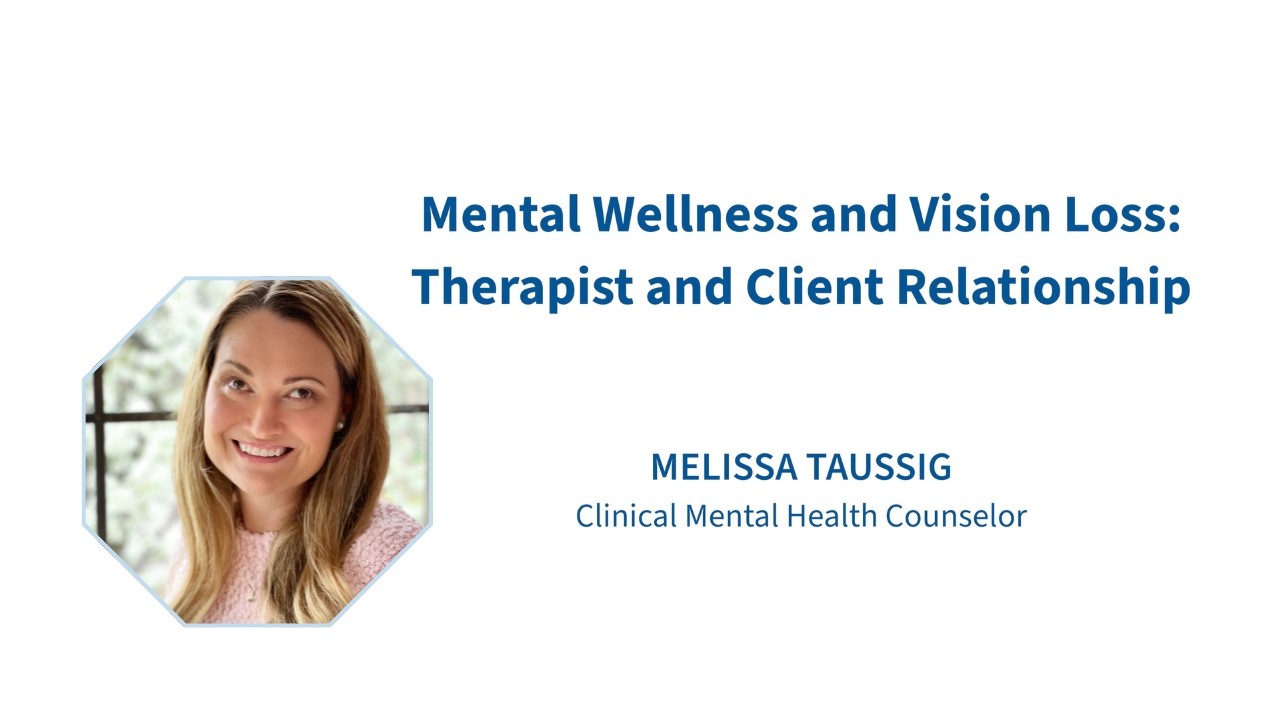
Mental Wellness and Vision Loss: Therapist and Client Relationship
Clinical Mental Health Counselor, Melissa Taussig, answers the question: What roles does empathy play in working with the blind and visually impaired (BVI) community?
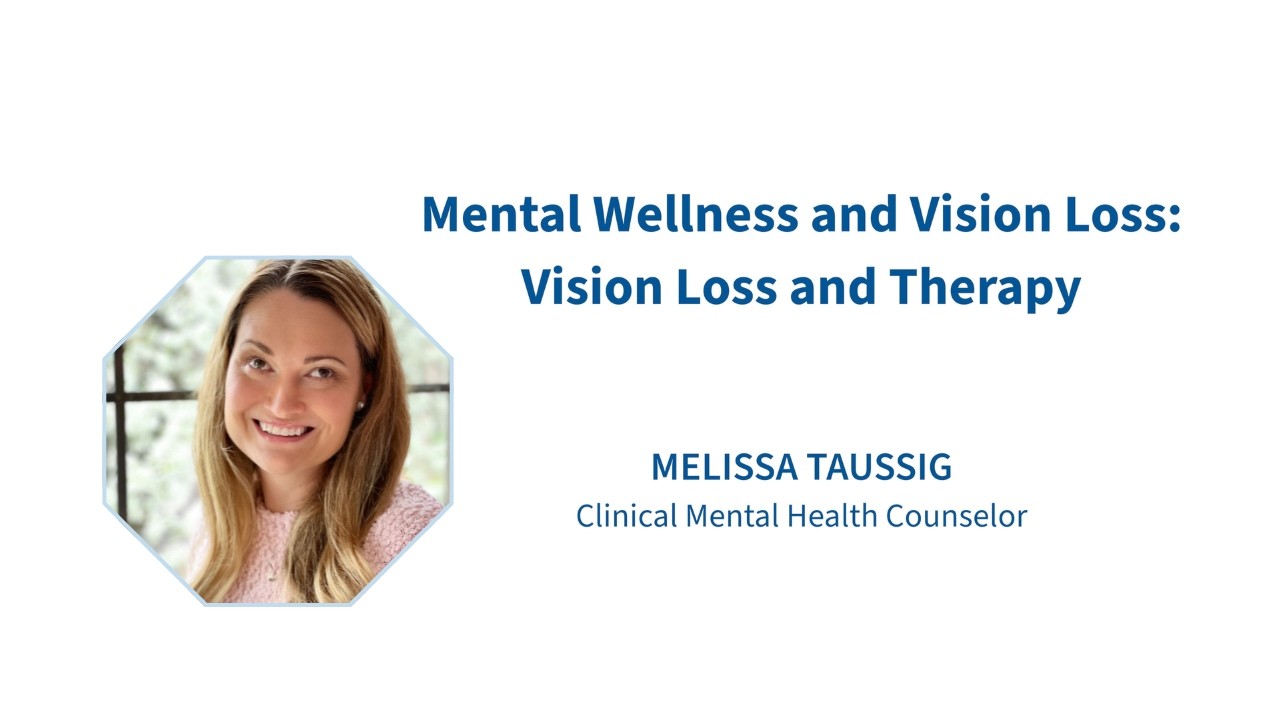
Mental Wellness and Vision Loss: Vision Loss and Therapy
Clinical Mental Health Counselor, Melissa Taussig, answers the question: How do you approach therapy with the blind and visually impaired (BVI) community?
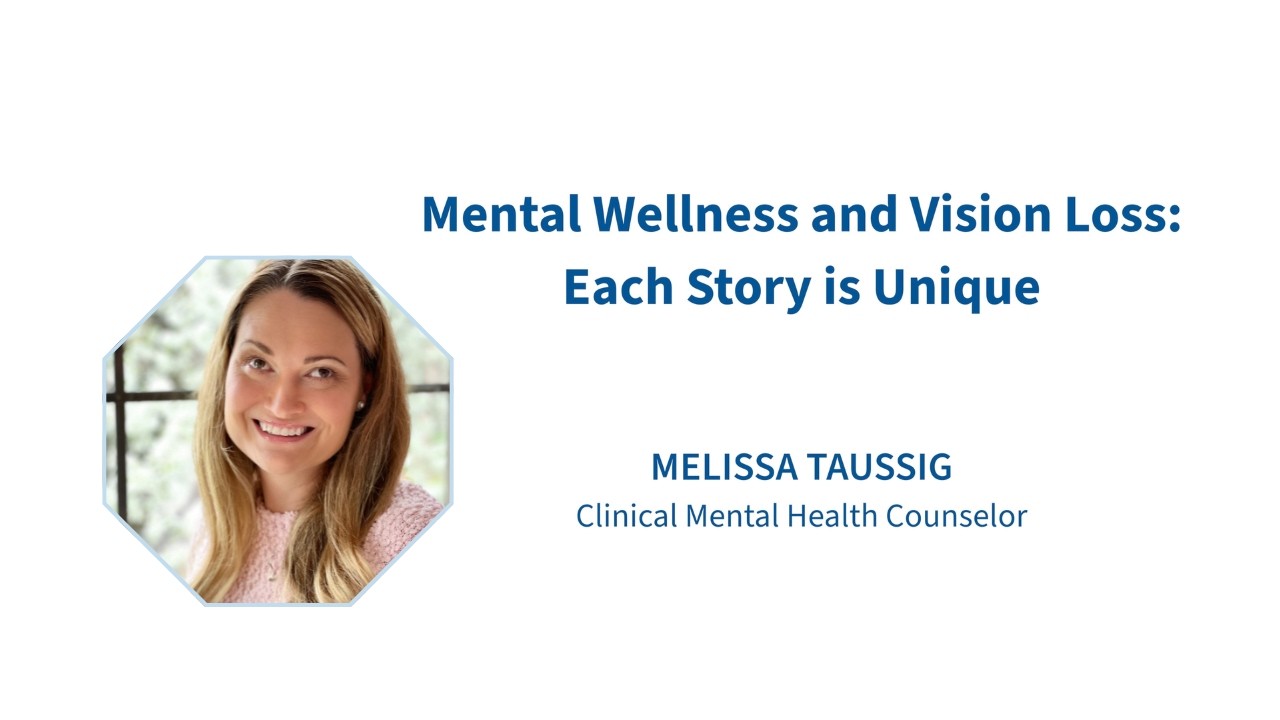
Mental Wellness and Vision Loss: Each Story is Unique
Clinical Mental Health Counselor, Melissa Taussig, answers the question: What would you highlight for therapists working with the blind and visually impaired (BVI) community?
Mental Wellness and Vision Loss: Avoiding Ableism in Therapy
Clinical psychologist, Joe Behen, answers the question: How can therapists avoid ableism in therapy?
Mental Wellness and Vision Loss: Fear and Vision Loss
Clinical psychologist, Joe Behen, answers the question: How does fear affect therapeutic relationships?
Mental Wellness and Vision Loss: Understanding Patient Anxiety
Clinical psychologist, Joe Behen, answers the question: What advice do you have for your colleagues about understanding vision anxiety?
Mental Wellness and Vision Loss: Shared Lived Experience (Part 2)
Clinical social worker Jenelle Landgraf answers the question: Why is it important for therapists to know about disability history?
Mental Wellness and Vision Loss: Disability Affirming Therapy
Clinical social worker Jenelle Landgraf answers the question: What is disability affirming therapy?
Mental Wellness and Vision Loss: The ASPECT Program
02:25
Julie Grutzmacher, Director of Patient Advocacy and Population Health Initiatives at Prevent Blindness, answers the question: What is the ASPECT program?
Mental Wellness and Vision Loss: Planting Seeds of Hope
Licensed Professional Counselor, Jeanetta Price, answers the question: Why do you share your story about blindness, grief, and identity? How can therapy be a catalyst?

To learn more about your mental health, check out the following resources:


Centers for Disease Control and Prevention (CDC):

Vision Loss and Mental Health

www.cdc.gov/visionhealth/resources/features/vision-loss-mental-health.html

The Mental Health of People with Disabilities

mental-health-of-people-with-disabilities.html

American Psychological Association: Depression

www.apa.org/topics/depression

National Alliance on Mental Illness (NAMI):

Signs and Symptoms

www.nami.org/About-Mental-Illness/Warning-Signs-and-Symptoms

ASPECT Patient Engagement Program:

PreventBlindness.org/Aspect-Patient-Engagement-Program

VisionServe Alliance:

VisionServeAlliance.org

Vision Aware:

APHConnectCenter.org/VisionAware

Eye2Eye:

SHP.Rutgers.edu/Psychiatric-Rehabilitation/Eye2Eye

National Suicide Prevention Lifeline: 988

988Lifeline.org/Talk-to-Someone-Now

OIB-TAC at Mississippi State University:

OIB-TAC.org

Hadley:

HadleyHelps.org

American Printing House for the Blind:

APH.org

American Foundation for the Blind:

AFB.org

American Council of the Blind:

ACB.org

National Federation of the Blind:

NFB.org

National Council of State Agencies for the Blind:

NCSAB.org