
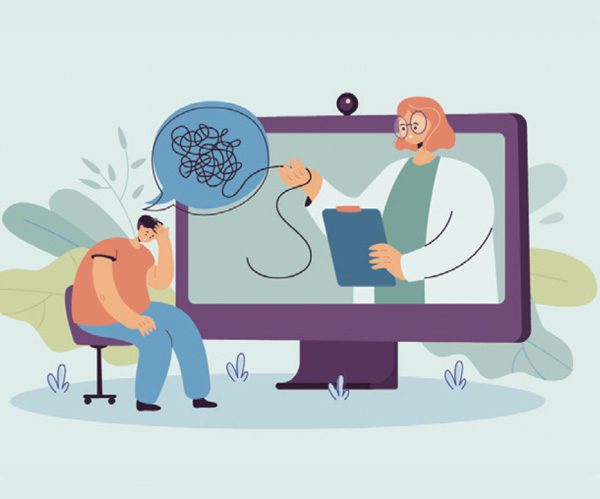
How do vision loss and eye disease affect mental health?
Age-related eye disease and other eye problems and conditions can cause loss of vision. For some, loss of vision can lead to feelings of depression, anxiety, and loss of independence. Not everyone who has vision loss will experience depression or anxiety. Some individuals may notice a change in their desire to socialize with others, or increased frustration with the additional time it may take to accomplish tasks of daily living. If you do experience any of these symptoms, know there is help available.

Take these steps to support your mental health:
Talk to your primary care doctor, mental health professional, or eye doctor:
Talk to your doctor about any changes to your emotional well-being. Ask your eye doctor questions on how eye disease will affect your daily life and work. Seek assistance on how to deal with the changes in your life due to age-related eye disease or other eye conditions.

Seek support:
Look for support groups of others who are affected by vision loss. MD Support provides a list of support groups near you on their website, mdsupport.org/support/. These groups can help you learn about your condition, share your experience, and find support.

Connect with others and the things that bring you joy:
Stay connected with friends and family to keep you from feeling isolated. Over time, you can find new ways to do the things you love or to discover new hobbies that bring you happiness.

Exercise:
Exercise can help symptoms of depression or anxiety and make you feel better. Talk to your health care professional to determine what exercise routine may work best for you, especially if you have changes to your vision due to age-related eye disease or other eye problems or conditions.

Seek vision rehabilitation:
Ask your eye doctor to recommend a low vision specialist. The specialist can help to maximize the use of the vision you have.

To learn more about your mental health, check out the following resources:
Centers for Disease Control and Prevention (CDC):
Vision Loss and Mental Health
www.cdc.gov/visionhealth/resources/features/vision-loss-mental-health.html
The Mental Health of People with Disabilities
mental-health-of-people-with-disabilities.html
American Psychological Association: Depression
National Alliance on Mental Illness (NAMI):
Signs and Symptoms
www.nami.org/About-Mental-Illness/Warning-Signs-and-Symptoms
ASPECT Patient Engagement Program:
PreventBlindness.org/Aspect-Patient-Engagement-Program
VisionServe Alliance:
Vision Aware:
APHConnectCenter.org/VisionAware
Eye2Eye:
SHP.Rutgers.edu/Psychiatric-Rehabilitation/Eye2Eye
National Suicide Prevention Lifeline: 988
988Lifeline.org/Talk-to-Someone-Now